Retaining Wall vs. Grading: Which Solution Do You Need for a Sloped NJ Yard?
Dave Steinel • August 24, 2026
A sloped yard can contribute to drainage problems, soil erosion, uneven lawn areas, and limited usable space. Depending on the steepness of the property, the solution may involve regrading the land, installing a retaining wall, or combining both. The right approach should address the terrain and water movement before new landscaping or sod is installed.
Problems Caused by a Sloped Yard
Sloped and uneven properties are common throughout Long Valley and Morris County. Some slopes are manageable, while others allow rainwater and soil to move toward lower areas of the property. Over time, this can affect the lawn, landscape beds, and areas near the home.
Common warning signs include:
- Water collecting in low areas
- Soil washing downhill after rain
- Bare or thinning grass on the slope
- Ground that pitches toward the house
- Uneven areas that are difficult to maintain
- Limited space for new landscaping
A professional property assessment can determine whether the slope can be reshaped or needs additional structural support.
When Yard Grading Is the Right Solution
Yard grading uses excavation equipment to reshape uneven land and create a smoother, more controlled slope. Soil may be removed, relocated, added, or compacted to correct elevations and improve surface drainage. Grading can also prepare the property for sod installation or a larger landscape renovation.
Grading is generally best for gentle or moderate slopes where there is enough space to create a gradual transition. It may be recommended when:
- The lawn contains low or uneven areas
- Water flows toward the house
- Runoff has created shallow erosion channels
- The yard needs preparation for sod
- The existing terrain affects landscape installation
DRS Lawn & Landscape includes grading, drainage solutions, and site preparation as part of its excavation services. This allows the underlying land conditions to be corrected before the finished landscape is installed.
When a Retaining Wall Is the Right Solution
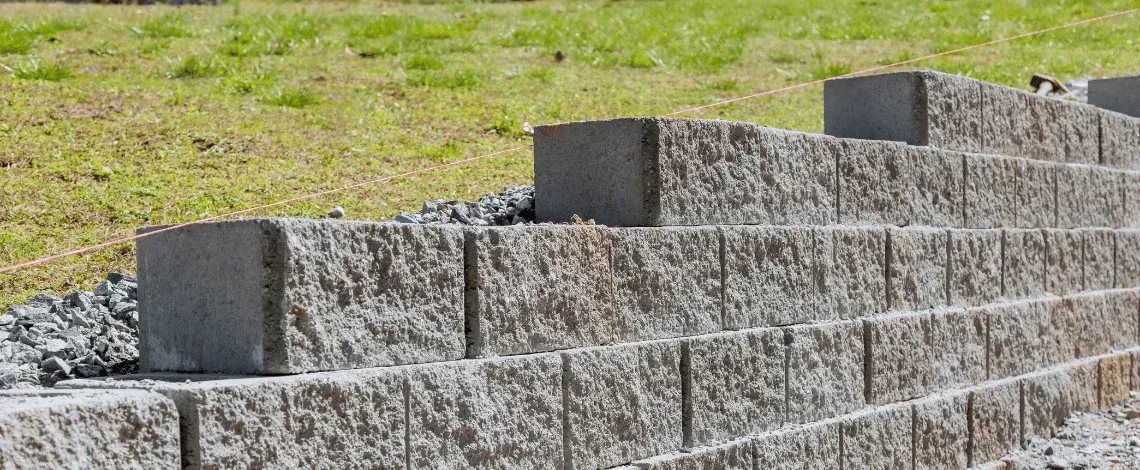
A retaining wall holds soil in place where the elevation change is too steep for regrading alone. It creates a defined transition between higher and lower sections of the property. This can help manage a hillside while making the surrounding yard easier to landscape and maintain.
A retaining wall may be appropriate when:
- The slope is too steep for gradual grading
- Soil repeatedly washes into lower areas
- There is not enough space to extend the slope
- You want to create a more level lawn or planting area
- An existing retaining wall is leaning or deteriorating
Retaining wall installation must account for excavation, base preparation, soil conditions, and drainage. These elements work together to support the wall and control water around the slope.
Retaining Wall vs. Regrading in NJ
Grading and retaining walls both address elevation problems, but they serve different purposes. Understanding how each solution works can help you choose the most effective approach for your property. In some cases, a professional evaluation may reveal that a combination of both methods will provide the best long-term results.
| Consideration | Yard Grading | Retaining Wall |
|---|---|---|
| Best for | Gentle or moderate slopes | Steeper elevation changes |
| Main function | Reshapes uneven ground | Holds elevated soil in place |
| Space required | More horizontal space | Less horizontal space |
| Finished appearance | Gradual, natural slope | Defined upper and lower areas |
| Common use | Drainage and site preparation | Hillside support and usable space |
| Related DRS services | Excavation, grading and drainage | Retaining walls, excavation and landscaping |
Grading is often enough when the land can be reshaped safely without creating an extreme slope elsewhere. A retaining wall becomes more practical when the elevation change is steep, or the property has limited space.
When You May Need Both
Some sloped yard solutions in NJ require both grading and a retaining wall. The wall can manage the steepest part of the hillside, while grading creates smoother transitions around the structure. This approach can also prepare the surrounding soil for sod, planting beds, or other landscape installation work.
A combined project may involve:
- Evaluating the slope and drainage conditions
- Excavating and preparing the wall area
- Installing the retaining wall
- Adding the necessary drainage
- Regrading the surrounding soil
- Completing the sod or landscape installation
Planning the work as a single project helps ensure that the wall, drainage, and surrounding landscape function together.
Why Drainage Matters for Both Solutions
Drainage should be considered before changing the elevation of any property. Regrading affects where surface water travels, while a retaining wall changes how water moves through and around the hillside. Without proper drainage, water may continue to collect, erode the soil, or place pressure on the wall.
DRS Lawn & Landscape provides drainage solutions as part of its excavation work. Coordinating drainage with grading and retaining wall installation can create more stable ground conditions and better prepare the yard for long-term landscaping.
Find the Right Solution for Your Sloped Yard
Grading may be the right solution for gradual slopes, uneven lawn areas, and drainage corrections. A retaining wall may be necessary when the hillside is steep or when you want to create a more defined and usable landscape area. Some properties need both to achieve a stable and functional result.
DRS Lawn & Landscape provides excavation, grading, drainage, retaining wall, sod installation, and landscape installation services in Long Valley and surrounding Morris County communities.
Contact us today to schedule a consultation and determine the right solution for your sloped yard in NJ.
Recent Posts